October 27, 2021
The Necessary Evolution of Energy Storage Systems (ESS)
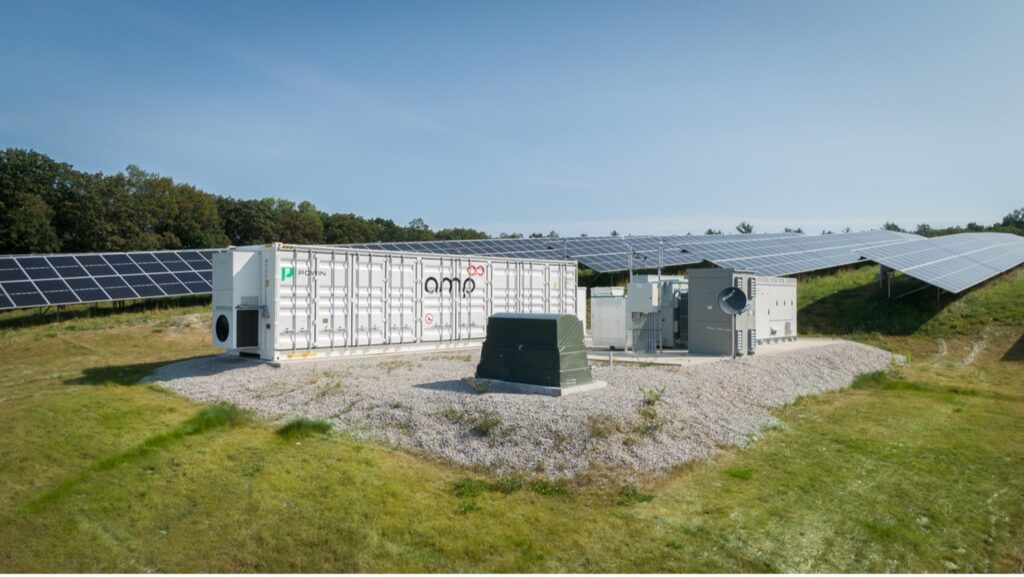
This is a guest blog post from Powin. Connect with Powin at #ESACon21 in Phoenix, AZ, December 1-3. Registration is open!
With the mass deployment of intermittent renewable resources, it is causing instability in the grid due to renewable penetration. It is critical that the energy storage industry continues to evolve its integration with renewables to ensure a resilient and dynamic grid.
In its most basic form, the close integration of energy storage with renewables starts with the co-location of a BESS and a renewable asset, most commonly solar. There are currently two methods to perform a ‘PV+Storage’ pairing: AC-coupled and DC-Coupled. In either configuration, the addition of a BESS serves the purpose of turning an intermittent asset into a dispatchable one. This allows for a more efficient, economical, dispatch of the system as measured at the Point-of-Interconnection (POI). The need for shifting of solar-generated energy from the time-of-generation to time-of-consumption has previously been identified as the “Duck Curve” problem. As energy storage software improves to incorporate even more ancillary services it will enable higher levels of penetration of renewables.
AC Coupled PV+Storage
Traditionally, addition of energy storage to a solar facility has been accomplished via AC-Coupling. AC Coupling is characterized by having redunant Power Conversion Systems (PCS’s) for the BESS and for the PV meaning that the Point of Common Coupling for the BESS and PV is on the AC side and is often at the Point of Interconnection (POI) to the grid. The clear delineation between the PV System and the BESS means that the storage component can be installed during the initial construction of the PV, or added as a retrofit to enable further participation in energy markets.

Powin has deployed BESS for several AC Coupled PV+S Systems, from the 250 kW / 1,000 kWh Beaverton microgrid to our largest retrofit projects, sized at 72MW/288MWh and 88MW/352MWh, respectively. These larger projects will participate in the California Independent System Operator (CAISO) market to provide flexible resource capacity.
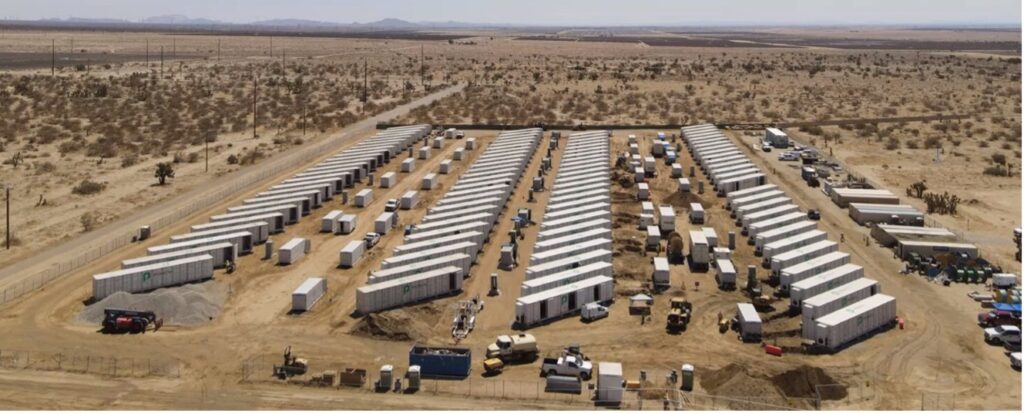
When integrating with a large, existing, solar facility such as these, that asset is generally active and generating revenue. The BESS should be installed and tested in a way that causes minimal disturbance to the operational PV System. While they are separate facilities, any load required to charge the batteries at the POI can greatly affect the financial performance of the solar asset.
The primary technical challenge in these types of systems is the integration with the existing SCADA network. Often the networking and cyber security considerations for large systems are more complex. Powin was able to solve this problem through the deployment of their Gatekeeper software. This allows the customer to control the communication between the site and the Powin cloud. Powin’s Remote Operations Center also has the necessary visibility to support commissioning, as well as monitoring and operations.
DC Coupled PV+Storage
As the power conversion market reaches maturity, DC-Coupled solutions have emerged as a competitive (and often favorable option) for new solar plus storage installations. A DC Coupled system is characterized by having the PV and BESS on a single shared DC Bus and a single PCS.
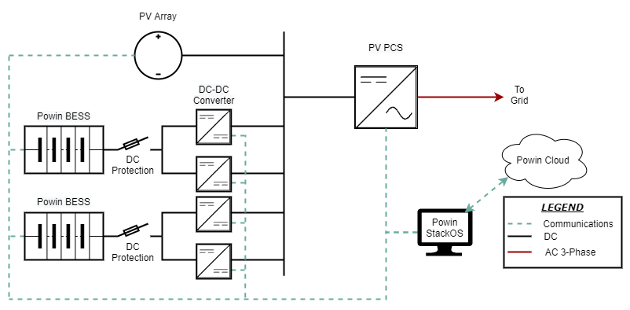
Designing a system this way allows for several advantages, when compared to AC Coupled systems. Primarily, it allows for clipping recapture where overproduction by the PV arrays can be directed to the BESS rather than being curtailed by the PV inverter. This is becoming more meaningful as the price of solar modules decrease, which enables PV systems to be oversized relative to their PCS or interconnection limit. Additionally, there are some system efficiency gains in utilizing DC-DC conversion, as well as cost efficiencies by removing redundant inverters.
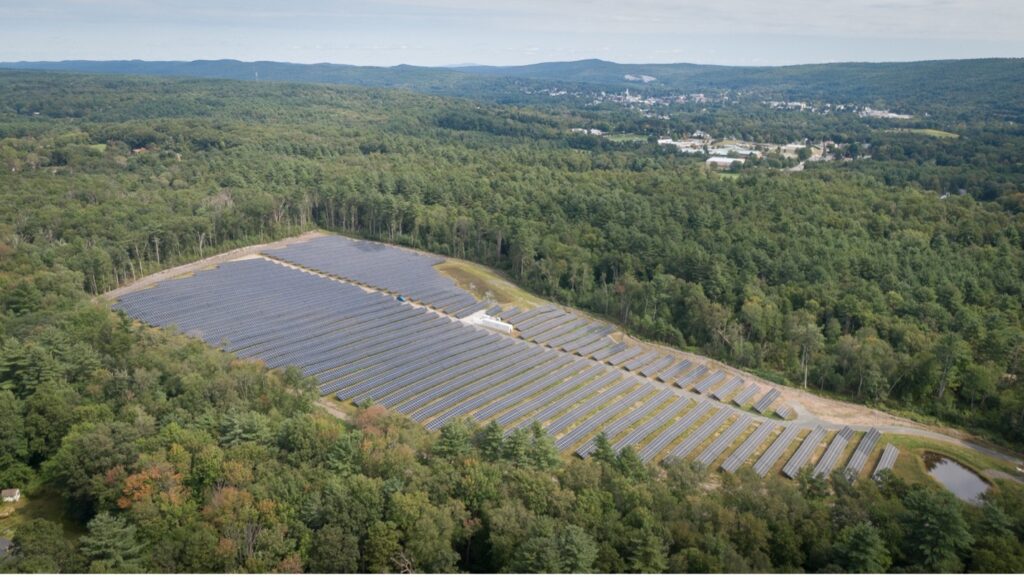
The primary challenge in deploying DC Coupled systems is the management of the common DC Bus voltage between the BESS, PV Array, and PV PCS. This is accomplished through the addition of DC-DC Converters on either the PV Array or, more commonly, the BESS. Synchronizing control of those DC-DC Converters with the PV PCS is accomplished through a single point of control. Some of the PCS and DC-DC Converter vendors have their own control schemes which centralize that control, but they will also then require that their DC-DC Converters are only used with their PV PCS. To allow maximum flexibility in hardware selection, Powin has developed a Power Plant Controler (PPC) for DC Coupled systems which is vendor agnostic. By centralizing this control within the Powin StackOS platform, we can closely couple full system control with battery health and performance. This allows for a finer level of visibility and optimization when compared to competitor solutions. Powin has partnered with Amp Energy on a portfolio of DC-Coupled projects in Massachusetts which leverage Powin’s PPC to integrate Dynapower DC-DC Converters with a Power Electronics PV PCS.